.png)

.jpg)
QSR marketing is tailored marketing communication used by fast food and quick service restaurant brands across online and offline channels to acquire, engage, and retain customers.
In 2026, the most effective QSR marketing strategies are executed through mobile apps. With 24 million downloads, the McDonald’s app was the most downloaded QSR app in the United States in 2021, ahead of Starbucks and Domino’s, proving that apps have become the primary battlefield for customer engagement.
TL;DR:
- Mobile apps now drive roughly 30% of QSR revenue and are the most effective channel for customer retention
- 61.4% of Starbucks guests use the company’s app, with app users more than twice as likely to visit multiple times a week
- Winning QSR marketing strategies combine loyalty programs, personalized offers, seamless ordering, and gamification—all delivered through apps
- Push notifications, in-app messaging, and exclusive app-only deals outperform traditional marketing channels
- The best QSR brands treat their app as their most valuable marketing asset
What Does QSR Marketing Mean in 2026?
QSR stands for “quick service restaurant”, the industry term for fast food establishments. These restaurants focus on speed, affordability, and convenience. Think McDonald’s, Domino’s, Starbucks, Taco Bell, and emerging specialty coffee brands like Blue Tokai and Third Wave Coffee.
QSR marketing differs from traditional restaurant marketing because customers make faster, more impulsive decisions. They’re hungry now. They’re on-the-go. They want convenience without waiting.
This creates unique opportunities. 54% of adults say purchasing takeout or delivery food is essential, including 72% of millennials and 66% of Gen Z adults. Brands that reach these customers at the right moment, especially through mobile apps, can drastically boost engagement and drive repeat purchases.
Why Mobile Apps are the Most Effective QSR Marketing Channel
App users were more than twice as likely to visit Starbucks multiple times a week and, 10 times more likely to visit multiple times a day. Apps don’t just facilitate transactions, they transform occasional customers into brand loyalists.
McDonald’s loyalty program members accounted for more than $6 billion in system-wide sales globally during the first quarter, with the company having 34 million active digital customers in the U.S.
Mobile apps deliver three critical marketing advantages:
Direct Customer Relationships: You own the data, the communication channel, and the customer experience. No third-party fees eating into margins.
Personalization at Scale: Apps track ordering patterns, preferences, and behavior, enabling hyper-targeted offers that actually convert.
Higher Order Frequency: The convenience of one-click reordering and personalized recommendations drives repeat purchases.
Best QSR Marketing Strategies for 2026
1. App-Based Loyalty Programs That Drive Repeat Business
81% of consumers say they would be likely to participate in a loyalty program if it was offered by their favorite restaurant, coffee shop, snack place or del. The most successful loyalty programs in QSR marketing today are app-exclusive.
McDonald’s exemplifies this strategy. Their loyalty program is only available through the app, driving downloads and engagement. Not only do you need to download the app, you also need to provide your name, email address and postal code.
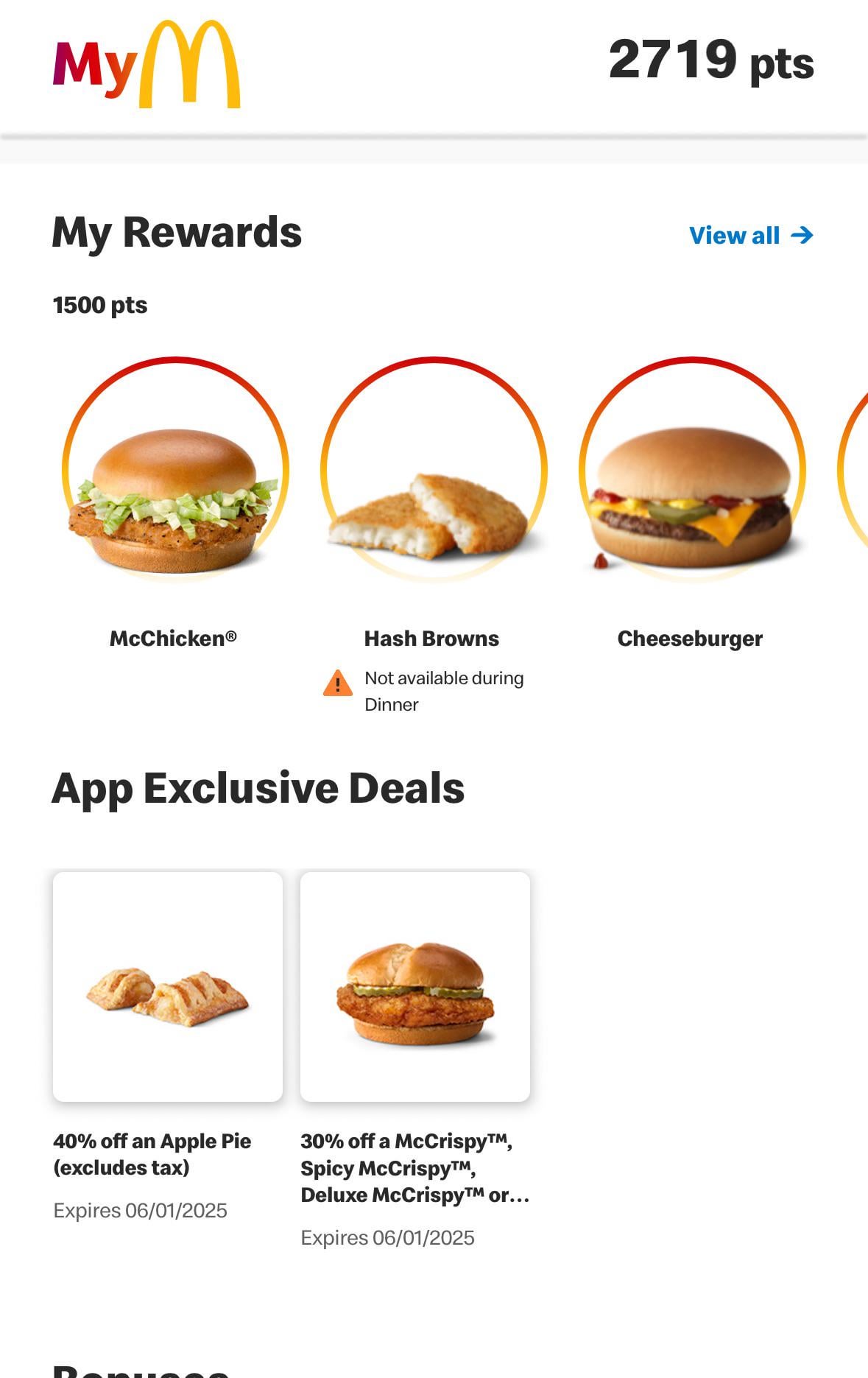
Winning loyalty strategies include:
- Points-based rewards for every purchase
- Tiered benefits that unlock with increased spending
- Gamification elements like badges, streaks, and challenges
- Birthday rewards and anniversary bonuses
- Surprise and delight moments with unexpected perks
The goal isn’t just rewards, it’s creating psychological investment in your brand through your app.
2. Push Notifications for Time-Sensitive Engagement
Push notifications are the most direct marketing channel QSR brands have. The best strategies send timely, relevant messages that feel helpful, not spammy.
High-performing notification strategies:
- Time-based triggers: Lunch deals at 11 AM, dinner reminders at 5 PM
- Location-based triggers: Special offers when customers are near your location
- Behavioral triggers: “Come back” messages after 7 days of inactivity
- Order status updates: Real-time tracking builds trust and reduces anxiety
- Personalized offers: Discounts on frequently ordered items
Domino’s uses email and push notifications with personalised offers based on factors like location, time, and weather, occasions.
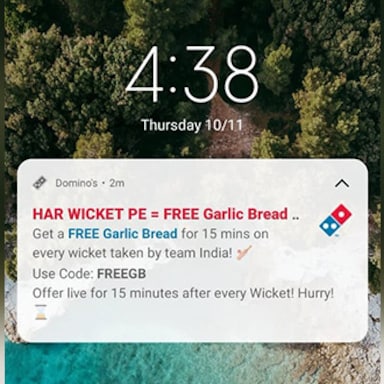
Avoid notification fatigue: Limit promotional messages to 2-3 per week. Always provide value. Make unsubscribing from certain types easy while keeping critical updates enabled.
3. Personalized Marketing at Scale
Generic experiences don’t cut it anymore. 92% of QSR diners want some form of personalization from their favorite brands. The app is where personalization happens most effectively.
Personalization tactics:
- Personalized home screens: Show relevant menu items based on time of day, weather, and past orders
- Dynamic recommendations: “You might also like” suggestions during checkout
- Custom offers: Discounts on items users view but don’t purchase
- Content personalization: Show different banners and promotions based on user segments
- Contextual upsells: Suggest drinks with meal orders, desserts with dinner
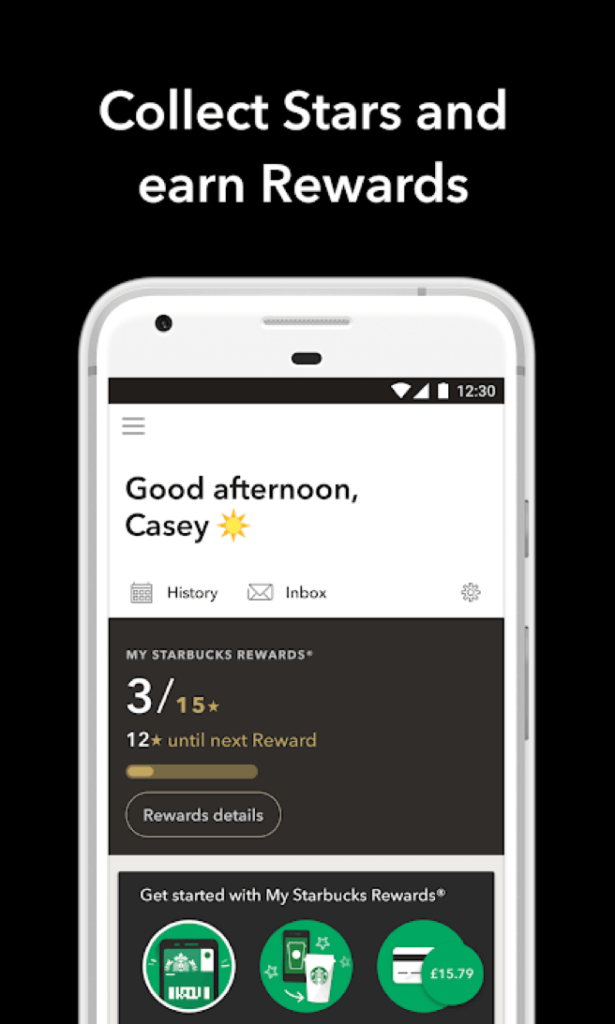
The Starbucks app stores data about individual customer preferences and purchasing behaviors, using that data to craft unique offers and discounts directly targeting these customers.
4. App-Only Deals That Drive Download and Engagement
Exclusive value is one of the most effective QSR marketing strategies. App-only deals give customers a compelling reason to download and keep your app.
Effective app-exclusive strategies:
- First-order discounts: 20% off for new app users
- App-only menu items: Limited-edition items available exclusively through the app
- Early access: Let app users try new menu items before general release
- Flash sales: Time-limited deals only available in-app
- Free delivery: Waive delivery fees for app orders
Taco Bell executed a campaign where their social media channels featured a single post with the hashtag #OnlyInTheApp, directing followers to download the Taco Bell app for exclusive deals.
Real-world example: Eatsure boosts deal adoption
Eatsure, India’s multi-brand cloud kitchen platform offering brands like Behrouz Biryani, Oven Story Pizza, and Faasos, needed a smarter way to market their deals and offers.
Their QSR marketing challenge was common: customers weren’t discovering or using available deals effectively, leading to lower average order values.
By implementing targeted in-app messaging through Plotline, Eatsure:
- Highlighted relevant deals at key moments in the ordering journey
- Showed personalized offers based on cart value and user preferences
- Created urgency with time-limited deal banners
- Guided users to apply coupons before checkout

The result? Significantly higher deal adoption rates and increased order values, all through smarter app-based marketing.
5. In-App Messaging for Contextual Marketing
While push notifications grab attention outside the app, in-app messagesdrive action when users are already engaged. These contextual messages are among the highest-converting QSR marketing tactics.
In-app messaging use cases:
- Welcome messages: Greet first-time users and highlight key features
- Promotional banners: Showcase limited-time offers on the home screen
- Upsell prompts: Suggest add-ons during checkout
- Feedback requests: Ask for ratings after positive experiences
- Feature announcements: Introduce new app capabilities
The best in-app messages feel native to the experience, not intrusive.
6. Gamification to Drive Customer Retention
Gamification is transforming QSR marketing by making ordering an engaging experience. It taps into psychological drivers like progress, achievement, and competition.
Gamification tactics:
- Streaks: Reward consecutive days of app usage
- Challenges: “Order 5 times this month for a free item”
- Leaderboards: Show top spenders or most frequent visitors (with opt-in)
- Scratch cards: Random rewards after purchases
- Spin-to-win: Interactive games for discounts
Real-world example: Swish drives repeat orders with spin-to-win
Swish, a fast-growing QSR brand in India, wanted to transform their customer retention marketing. They implemented a spin-to-win rewards center using Plotline that created an engaging, game-like experience.
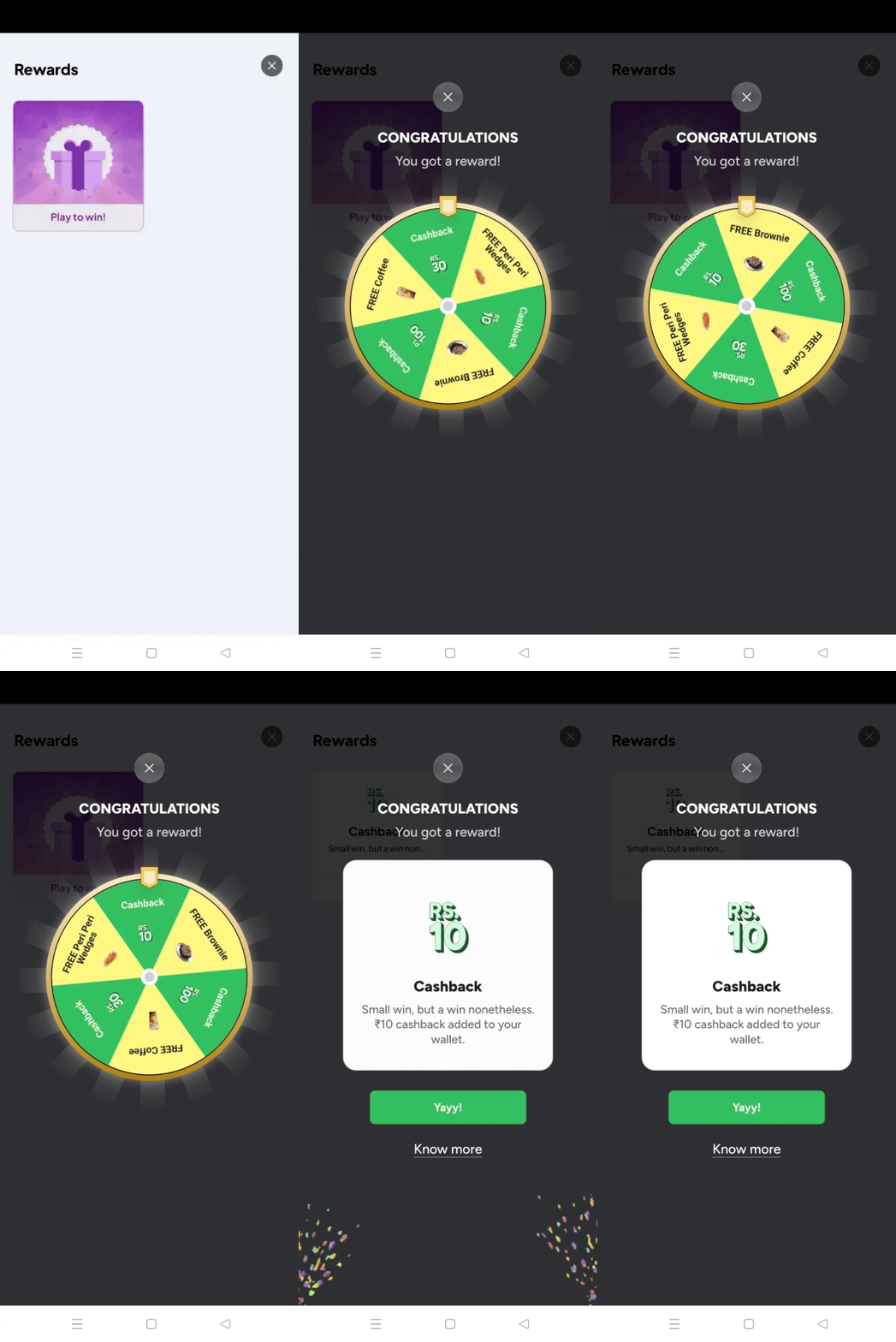
How their QSR marketing strategy works:
- Customers earn spins by completing orders or achieving milestones
- Each spin offers rewards like discounts, free items, or bonus points
- Visual rewards center shows available spins and earned prizes
- Time-limited spins create urgency to order again soon
The gamified marketing approach transformed routine ordering into something exciting. Customers return more frequently to use their earned spins, and the element of surprise keeps them engaged. The rewards center became a key driver of repeat orders without heavy discounting.
7. Seamless Mobile Ordering as a Competitive Advantage
Speed is everything in QSR marketing. Every extra tap, every loading delay, every confusing menu structure costs you conversions.
Best practices for mobile ordering:
- One-click reordering: Save favorite orders and past purchases for instant reorder
- Smart search: Predictive search that shows results as users type
- Visual menu: High-quality food photography with clear descriptions
- Customization made easy: Intuitive interfaces for modifying orders
- Multiple payment options: Saved cards, Apple Pay, Google Pay
- Order tracking: Real-time updates from kitchen to delivery
Domino’s app is more than just a sales channel; it is the heart of their digital marketing strategy and customer experience. Features like the Pizza Tracker and one-click reordering build loyalty.
8. Strategic Onboarding to Drive Activation
First impressions matter in QSR marketing. Your onboarding flow determines whether new users become active customers or uninstall within 72 hours.

Effective onboarding includes:
- Progressive value delivery: Show benefits before asking for information
- Quick wins: Offer a first-order discount to drive immediate action
- Permission priming: Explain why notifications help them (exclusive deals, order updates) before requesting permissions
- Minimal friction: Allow guest checkout initially, then incentivize account creation
- Visual progress indicators: Show users how close they are to completing setup
9. Omnichannel Marketing Centered on the App
Your app shouldn’t exist in isolation. The best QSR marketing strategies connect digital and physical experiences seamlessly, with the app as the hub.
Omnichannel strategies:
- Scan to order: QR codes at tables that open the app for ordering
- Curbside pickup integration: Let users alert staff when they arrive
- In-store kiosk sync: Continue orders started in the app on in-store kiosks
- Social media integration: Allow sharing orders or achievements to social platforms
- Cross-channel promotions: Use social media to drive app downloads with exclusive codes
Taco Bell demonstrates effective omnichannel marketing through its integrated app, social media, and in-store experiences.
10. App Store Optimization for Customer Acquisition
Before users can engage with your QSR marketing, they need to find and download your app. App Store Optimization ensures visibility.
ASO best practices:
- Keyword optimization: Target terms like “pizza delivery,” “coffee near me,” “fast food”
- Compelling screenshots: Show key features and benefits visually
- Video previews: Demonstrate ordering flow and app features
- Ratings and reviews: Encourage satisfied customers to leave reviews
- Regular updates: Frequent updates signal active development
Domino’s uses smart App Store Optimisation (ASO), ensuring their app ranks high for “pizza” and “food delivery” searches.
QSR Marketing Channels: Why Apps Outperform Traditional Options
Push Notifications vs. Email Marketing
Push notifications deliver 5-10x higher open rates than email. They’re immediate, visible, and actionable—perfect for time-sensitive QSR offers.
Best for: Time-sensitive offers, order updates, re-engagement campaigns, loyalty program updates
In-App Messaging vs. Display Ads
In-app messages convert at 3-5x the rate of display ads because they reach users who are already engaged with your brand and ready to order.
Best for: Feature announcements, promotional banners, upsell prompts, onboarding guides
App-Based Loyalty vs. Traditional Punch Cards
Digital loyalty programs in apps track automatically, never get lost, and enable sophisticated personalization that paper cards can’t match.
Best for: Retention marketing, increasing order frequency, building brand affinity
Location-Based App Triggers vs. Billboard Advertising
Geofencing through apps targets customers when they’re nearby and hungry—delivering measurable ROI that billboards can’t provide.
Best for: Driving foot traffic, competing for nearby customers, time-of-day promotions
QSR Brands with Exceptional Marketing Strategies
Starbucks
Starbucks pioneered app-based QSR marketing and continues to set the standard. In 2026, sentiment analysis revealed that 68% of tweets about the Starbucks Rewards program were positive, reinforcing its effectiveness as a customer loyalty program.
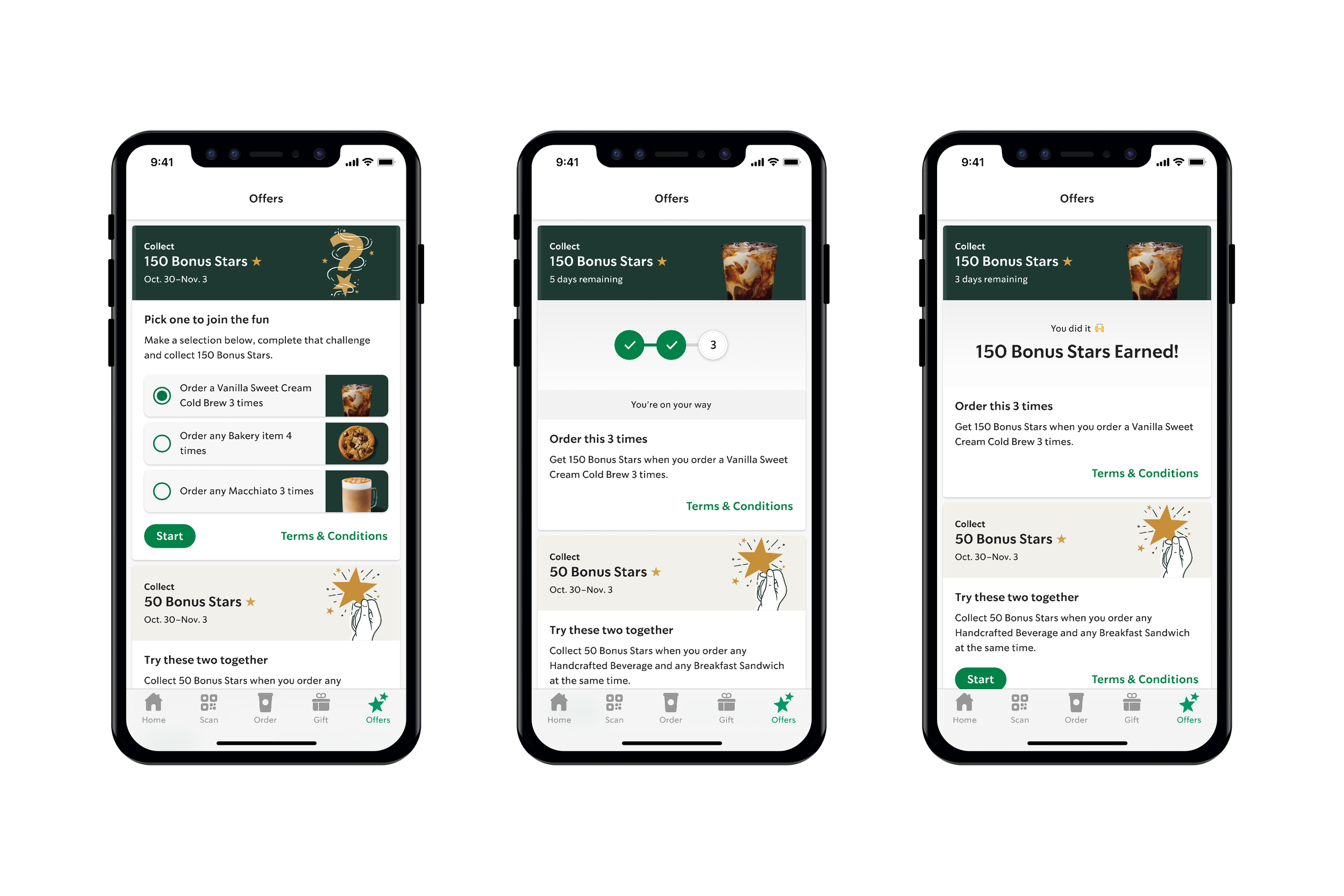
What makes their marketing strategy exceptional:
- Seamless mobile ordering: Order ahead and skip the line
- Stars-based loyalty program: Gamified rewards with tiers and challenges
- Personalized offers: Customized deals based on purchase history
- Digital card: Preload money for faster transactions
- Music integration: See what’s playing in stores you visit
The Starbucks app transforms a commodity purchase (coffee) into a premium, personalized experience.
McDonald’s
McDonald’s is creating a Digital Marketing Fund in 2026 that accounts for 1.2% of franchisees’ digital revenues, shifting spending away from marketing with lower ROI into digital marketing.
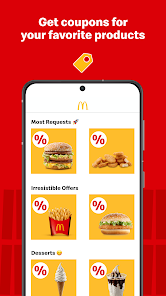
What makes their marketing strategy effective:
- MyMcDonald’s Rewards: App-only loyalty program driving downloads
- Mobile ordering: Customize meals and pay in advance
- Multiple pickup options: Drive-thru, curbside, or in-store
- Exclusive deals: App-only promotions and limited-time offers
- Deal of the day: Daily rotating offers to encourage frequent app checks
McDonald’s recognizes that app-based marketing delivers measurable ROI and customer lifetime value.
Domino’s
The Domino’s app is more than just a sales channel; it is the heart of their digital marketing strategy and customer experience.

What makes their marketing innovative:
- Pizza Tracker: Real-time order tracking from prep to delivery
- One-click reordering: Save favorite orders for instant repeat purchases
- Voice ordering: Order via voice command through app integration
- Domino’s Hotspots: Deliver to non-traditional locations like parks
- AI-powered recommendations: Personalized suggestions based on order history
Domino’s treats technology as a competitive marketing advantage, not an afterthought.
Third Wave Coffee
Third Wave Coffee is disrupting India’s coffee market with experience-driven marketing, with a strong customer retention rate of nearly 60%.
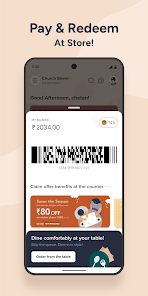
Their marketing strategy:
- Source-to-cup storytelling: Share coffee origin stories through the app
- Mobile ordering: Skip queues during peak hours
- Subscription models: Monthly coffee subscriptions managed through app
- Educational content: Brewing guides and tasting notes
- Loyalty integration: Points on every purchase
Blue Tokai
Blue Tokai has an unbeatable omnichannel strategy, with a seamless presence across touchpoints, from Amazon carts to airport lounges, physical outlets and corporate pantries. Its D2C website, app, cafés and partnerships with platforms like BigBasket, Blinkit and Zomato form an interconnected distribution ecosystem.
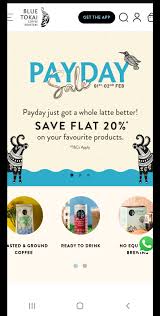
Their marketing approach:
- Direct trade transparency: Show which estates beans come from
- Fresh roasting promise: Order tracking from roasting to delivery
- Subscription service: Regular coffee deliveries managed through app
- Brew guides: In-app tutorials for different brewing methods
- Café locator: Find nearby Blue Tokai outlets
Common QSR Marketing Challenges and How to Solve Them
1. Low Customer Acquisition
Many QSRs struggle to convince customers to choose their brand over competitors and third-party platforms.
Solution: Create compelling value propositions through app-exclusive deals. Offer generous first-order discounts (20%+), app-exclusive menu items, or immediate loyalty benefits. Use in-store signage, receipt messages, and social media campaigns to promote the value. Make it crystal clear: “Save $5 on your first order, download now.”
2. Poor Customer Retention
Customers order once or twice,then never return.
Solution: Drive early engagement with immediate value. Send welcome offers within 24 hours. Trigger relevant push notifications at optimal times. Show utility beyond ordering - loyalty points tracking, exclusive content, early access to new items. Create habit formation within the first week through streaks and challenges.
Like Swish’s spin-to-win approach, gamification creates reasons to return that go beyond hunger.
3. Marketing Fatigue and Opt-Outs
Customers disable notifications or unsubscribe after receiving too many irrelevant messages.
Solution: Implement intelligent marketing strategies. Segment users by behavior and preferences. Respect frequency caps (2-3 promotional messages per week maximum). Personalize messages based on order history and location. Provide preference controls so customers can choose what they receive.
4. Low Order Frequency
Customers have your app but rarely use it.
Solution: Drive habitual usage through strategic marketing. Send lunch reminder notifications. Offer streak bonuses for consecutive orders. Create time-bound challenges (“Order 3 times this week for a free item”). Use location-based triggers when customers are near your restaurants. Make reordering frictionless with saved favorites.
5. Customers Not Discovering Deals
Customers miss out on available deals and offers, leading to lower average order values.
Solution: Don’t make customers hunt for deals, surface them contextually. Show cart-value-triggered promotions (“Add $3 more for free delivery”). Highlight time-sensitive deals with countdown timers. Use banner notifications for flash sales.
EatSure solved this with targeted in-app messaging that shows personalized deals at key decision moments like browsing, cart review, and checkout.
6. Competing with Third-Party Platforms
DoorDash, Uber Eats, and similar platforms own customer relationships and take hefty commissions.
Solution: Make direct ordering significantly more valuable. Offer lower prices or better deals for direct orders. Provide exclusive menu items only available through your own channels. Build loyalty programs that reward direct ordering. Focus on the long-term value of owned customer relationships versus rented traffic.
7. Slow Marketing Execution
Traditional marketing requires weeks of development time for every campaign change or test.
Solution: Use no-code tools that empower marketing teams to launch and iterate independently. Test different messaging, offers, and flows without waiting weeks for engineering sprints. Move fast, learn from data, and optimize continuously.
How Plotline Powers Winning QSR Marketing Strategies
Building seamless in-app journeys shouldn’t take weeks. Plotline helps QSR brands ship engaging marketing experiences in days, without dev resources.
What makes Plotline different:
Ship marketing campaigns instantly: Launch loyalty programs, personalized offers, gamified rewards, and contextual messaging without waiting on engineering. Update everything in real-time, no app releases required.
Test and optimize continuously: A/B test messaging, offers, timing, and targeting. Learn from data and iterate quickly. Scale what works across your entire customer base.
Create experiences customers actually want: Build spin-to-win rewards like Swish, surface contextual deals like Eatsure, or design your own unique engagement strategy, all with our no-code editorWe know shipping fast is critical. Plotline removes the bottleneck between your marketing ideas and execution. See how we can help you ship faster and engage smarter - talk to our team.
